Showing posts with label Autism. Show all posts

Saturday, 2 January 2021

Digital Education Futures – The now and the future for Special Needs and Disability

Digital Education Futures – The now and the future for Special Needs and Disability https://www.gna.org.gh/1.19573006 


Education is dynamic, especially for children with Special Educational Needs and Disabilities (SEND). The World Health Organisation suggests that approximately 15% of the global population live with some form of disability. The right education equips children with the skills useful into their future, and can lessen their marginalization.

Advances in technology determine the skills needed for future jobs and meaningful contribution to society. Using technology to create innovative approaches to education can offer students the foundational skills that are desirable for future work.

Covid-19 has resulted in school closures, government restrictions and changing public health guidelines being implemented to keep learners safe. Models of learning largely remain the same as public schools follow the national curricula. Only a few Ghanaian educational institutions are focused on providing the necessary support and interventions for SEND children unable to attend school.

The Government of Ghana (Ghana Learning Television (GL-TV)) and some media houses broadcast lessons for various subjects from kindergarten to secondary level. The only obvious accommodation made for SEND children in this form of delivery is sign language for the hearing impaired. While a few institutions provide some essential support for their students, most public schools in Ghana lack these opportunities. It is usually the case that low resourced educational institutions have problems with the basic supply and provision of teaching and learning materials.

Where the delivery of education is virtual, the priority for Special Educational Needs and Disability Coordinators (SENDCO)s, Inclusion managers and school management remains providing the needed virtual support and intervention for students with special needs. SENDCOs and teachers are concerned about their lack of skills to implement virtual learning programs, which has meant leap-frogging from face-to-face to virtual teaching.

Challenges and solutions during Covid-19 Virtual Learning

Differing accommodations must be made for SEND students to enable their access to technology. Some students on the autism spectrum may have social communication, sensory, attention deficit, flexibility or other challenges that impede their efforts to engage in virtual learning. Others with cerebral palsy may have challenges with physical, gross and fine motor skills, denying them access to certain technologies. Students with visual impairments need additional applications installed on their devices, and the list goes on.

There are common barriers. These include access to quality broadband data, digital technology tools, unaffordable software and/or archaic, impractical equipment often donated by charitable organisations.

Supporting children/wards during online learning, requires parents and caregivers drawing on extra skills to address issues like Inattentiveness, noncompliance, frequently prompting children to refocus, or going offline because children are unable to continue to partake in sessions. Regarding autism, children are sometimes over-stimulated or distracted when they use iPads or laptops. Trying to focus, follow instructions, or other distractions like the novelty of new technologies (e.g. seeing themselves on the monitors/screens) can affect learning in the home environment. Of great concern is the digital safety of children, which is not very well addressed when access to online facilities is given without properly trained supervision. These concerns remind us of the sterling job teachers and classroom assistants do to support SEND children.

Covid-19 has changed the status quo. Technology offers teletherapy, online training for parents and professionals using tools such as Zoom and Telegram. There are other excellent applications (Apps) and tools beneficial to explore. All stakeholders (Teachers, therapists and parents) should be encouraged to embrace these avenues even after Covid-19.  

The grim reality is that the disparity in access to good education and digital technology grows wider in schools remaining closed until the unforeseeable future (2021).

It is encouraging that Covid 19 has thrown the spotlight on the virtual education and the benefits offered if properly harnessed and supported.

How do we look into the future?

Participation in a globally-connected world, means having exciting models of education to be pursued.


 Develop the individual strength of a person as opposed to a group

Individualised learning based on subject areas and skills that give a person the tools to gain skills for future employment. Involving young people in the design of their own education and supporting them with coaches, mentors and facilitators.

       Offer Flexibility in education

Offering modules designed to be flexible and that can be fitted in. Modules that are transferable into different models. e.g. WASSCE grades transferable to GCSE O Level, Open Educational Resources or informal online learning platforms like FutureLearn.

       Respond to changing employment requirements

A flexible curriculum training people for global employment in the future.


These initiatives may seem complicated to explore especially in public schools and institutions which are guided by the national curriculum. However, we must continue to ensure inclusive and equitable quality education and promote lifelong learning opportunities for all (SDG 4, UN).

By

Emmanuel Ntow Nyarko: ARIS PLD Consultant and CEO ENNY Foundation &

Hannah Ackom-Mensah: Researcher, AutismDTgh


Wednesday, 28 October 2020

Our networks during Covid-19 pandemic: Autism Awareness Care and Training Centre (AACT)

Autism Awareness Care and Training Centre (AACT) has always been of immense support to AutismDTgh, and continues to be a fountain of knowledge on Autism in Ghana. 

AACT is an NGO, local support and education centre for children with autism in Ghana.

https://aactgh.org/newaact/ 

https://m.facebook.com/profile.php?id=230175567121419&__tn__=C-R

https://www.instagram.com/explore/locations/230175567121419/autism-awareness-care-and-training-centre-kokomlemle?hl=en

https://twitter.com/aact_ghana?lang=en


AACT is moving to 

Digital Address: GE-259-4572;
Address: Adjin Nye St;


New site


Pictures from old site at Kokomlemle


Sunday, 25 October 2020

Our networks during Covid-19 pandemic: Enny Foundation

 Enny Foundation continues to be a crucial part of our network especially during the Covid-19 pandemic.

https://www.facebook.com/ennyfoundation/


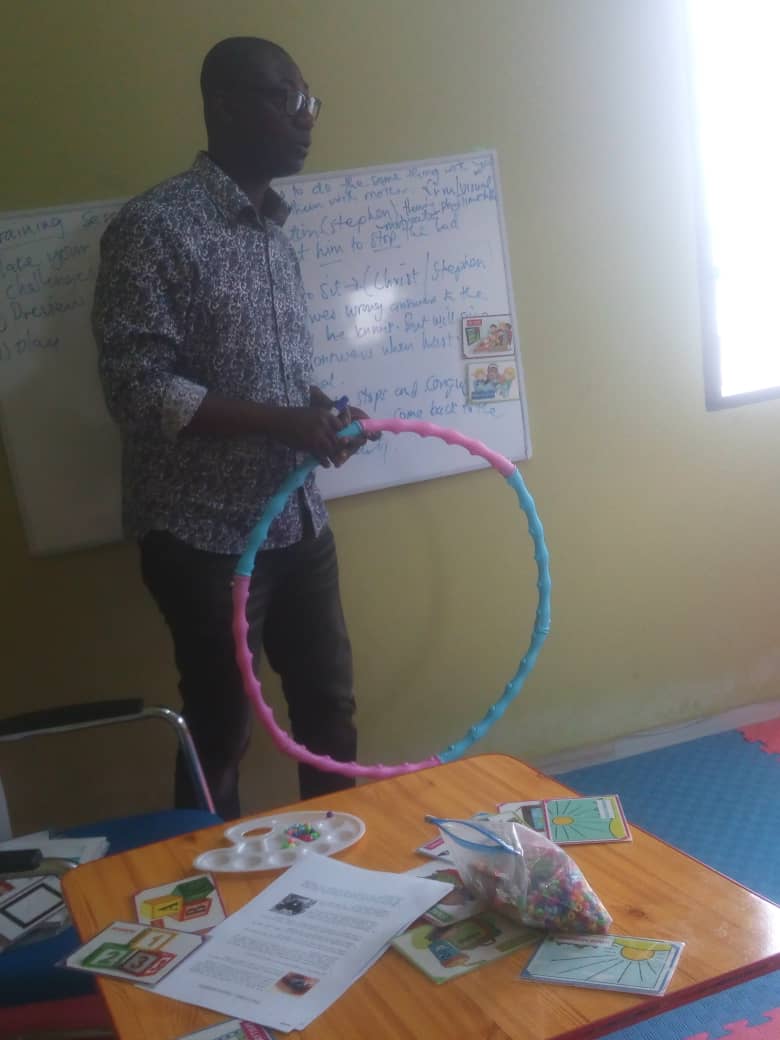
Emmanuel Nyarko training Facilitators for outreach services on 24.10.2020


Continuous professional development is paramount.


Enny Foundation is planning to collect data from stakeholders about the impact of Covid-19 on Special Needs and Disability children. It will help inform the services they provide. 
Evidence-Based Practice.


Autism Awareness Care and Training Centre (AACT) and AutismDTgh

 https://m.facebook.com/1987804434793148/photos/a.2040403826199875/2637246446515607/?type=3


Tuesday, 22 September 2020

Autism Basics for Parents and Caregivers (Part 1)

 In collaboration with Tanzania Autism Resource Centre, AutismDTgh presented on Saturday 19th September 2020.

The presentation was in English and Swahili.

For further information, contact 


Tuesday, 21 July 2020

Happy anniversary!!!

Happy anniversary!!!
In spite of Covid-19, we have made great strides.
A lot of interaction, awareness creation, networking, media broadcast, influencers-at-work etc.
Believe it or not, the journey has already been 3 years!
As a team, we have put in 100s and 100s of hours to get here
We can all give ourselves a huge pat on the back.
Ayeeko!!!
Thank God for it all.
God bless all our efforts, God bless all of us, and God bless AutismDTgh!

-From the Core Team
Joshua Addy
Nana Akua Owusu
Emmanuel Ntow Nyarko
Mrs. Serwah Quaynor
Hannah Ackom-Mensah

Wednesday, 10 June 2020

Autistica: 'Managing the transition back to school'

Very interesting and informative webinar by Autistica today. 
Webinar posted on Facebook 

Host: Dr. James Cusack, Director of Science at Autistica

Panellists:
Dr. Catherine Carroll, Researcher and Senior Lecturer in Education at St. Mary's University
Freddie Adu, Headteacher at Queensmill School
Louisa Harrison, Parent and PACT therapist


Sunday, 31 May 2020

News paper articles & other online media re: AutismDTgh

Articles for 2021


Articles for 2019-2020


Literature on Autism Spectrum Conditions/Disorder (ASC/D)

  1. Autism Spectrum Disorders in Africa: Current Challenges in Identification, Assessment, and Treatment: A Report on the International Child Neurology Association Meeting on ASD in Africa, Ghana, April 3-5, 2014 (Kavita Ruparelia, BA, Amina Abubakar, PhD, Eben Badoe, MMed, Muideen Bakare, MNIM, Karren Visser, BA, Diane C. Chugani, PhD, Harry T. Chugani, MD, Kirsten A. Donald, PhD, MPhil, Jo M. Wilmshurst, MD, Andy Shih, PhD, David Skuse, MBChB, and Charles R. Newton, MD)
  2. Strategies for Transitioning Preschoolers with Autism Spectrum Disorders to Kindergarten ( 
  3. Wilson K. Agbeke)
  4. Transition from preschool to Kindergarten for Children with Autism Spectrum Disorder A Systematic Review (Qixiu Miao)
  5. Autism and talent: the cognitive and neural basis of systemizing (Simon Baron-Cohen, PhD, MPhil; Michael V. Lombardo, PhD)
  6. Genetic contribution to ‘theory of mind’ in adolescence (Varun Warrier & Simon Baron-Cohen)
  7. Reflections on a university based social group for students with Asperger syndrome (Joanna HastwellJohn HardingNicola Martin & Simon Baron-Cohen)
  8. Evidence-based support for autistic people across the lifespan: Maximizing potential, minimizing barriers, and optimizing the person-environment (Meng-Chuan LaiEvdokia AnagnostouMax Wiznitzer & Carrie Allison)
  9. LEGO ® Therapy and the Social Use of Language Programme: An Evaluation of Two Social Skills Interventions for Children with High Functioning Autism and Asperger Syndrome (Gina OwensYael E GranaderAyla Humphrey & Simon Baron-Cohen)
  10. Sensory perception in autism (Caroline Robertson & Simon Baron-Cohen)
  11. The misnomer of ‘high functioning  autism’: Intelligence is an  imprecise predictor of functional  abilities at diagnosis (Gail A Alvares , Keely Bebbington1, Dominique Cleary,  Kiah Evans, Emma J Glasson, Murray T Maybery, Sarah Pillar, Mirko Uljarević , Kandice Varcin, John Wray and  Andrew JO Whitehouse)

  • Badoe, E. V. (2014). The Child who does not speak: The face of autism in Accra. In Welbeck, J. E., Goka, B. Q., Renner, L. A., Oduro-Boatey, C. & Oppong, S. A. (Eds.). Tropical issues in Maternal and Child Health in Ghana, Clinical Sciences Series Reader. No. 9, 45-59. Digibooks. 
  • Baron-Cohen, S. (2008). Theories of the autistic mind. The Psychologist, 21, 112-116. https://thepsychologist.bps.org.uk/volume-21/edition-2/theories-autistic-mind
  • Belmonte, M. K., Saxena-Chandhok, T., Cherian, R., Muneer, R., George, L., & Karanth, P. (2013). Oral motor deficits in speech-impaired children with autism. Frontiers in integrative neuroscience, 7, 47. https://doi.org/10.3389/fnint.2013.00047
  • Camarata, S. (2014) Early identification and early intervention in autism spectrum disorders: Accurate and effective? International Journal of Speech-Language Pathology, 16(1), 1-10, https://doi.org/10.3109/17549507.2013.858773  
  • Franz, L., Chambers, N., von Isenburg, M., & de Vries, P. J. (2017). Autism spectrum disorder in sub-Saharan Africa: A comprehensive scoping review. Autism Research, 10(5), 723-749. https://doi.org/10.1002/aur.1766  
  • Fletcher-Watson, S., Adams, J., Brook, K., Charman, T., Crane, L., Cusack, J., Leekam , S., Milton, D., Parr, J. R. & Pellicano, E. (2019). Making the future together: Shaping autism research through meaningful participation. Autism, 23(4), 943–953. https://doi.org/10.1177/1362361318786721
  • Kanner, L. (1943). Autistic disturbances of affective contact. Nervous Child, 2, 217–250. https://doi.org/10.1105/tpc.11.5.949
  • Karanth, P., Shaista, S., & Srikanth, N. (2010). Efficacy of communication DEALL-an indigenous early intervention program for children with autism spectrum disorders. Indian Journal of Pediatrics, 77(9), 957-962. https://doi.org/10.1007/s12098-010-0144-8
  • Kenny. L., Hattersley, C., Molins, B., Buckley, C., Povey, C. & Pellicano, E. (2016). Which terms should be used to describe autism? Perspectives from the UK autism community, Autism, 20(4) 442-462. https://doi.org/10.1177/1362361315588200

Sunday, 15 March 2020

AutismDTgh


AutismDTgh brings together parents, carers, professionals and other stakeholders to research ways in which Digital Technology impacts Autism Spectrum Disorder/ Conditions and uses dialogue to explore how research can improve policy making and conditions in Ghana and across Africa.


Professor E. Badoe presenting at AutismDTgh 2019